During the war, my parents owned a diner
in downtown Waynesville, not far from our trailer.
I remember little, myself being three:
two Sams, one the cook, the other a barber;
pool, pinball. darts, more than a boy could want.
I napped in a closet. My dreams were sweet.
My mom hung a crucifix with palm fronds
above the jukebox. No one noticed it.
That’s how it was then, because of the war.
But there was one thing. It was ’69,
’70. The diner was the bus stop
from base. They were all draftees, by that time.
In high school, they’d watched on TV the Tet
Offensive my dad fought two years before.
A bus arrived. They disembarked, a cluster
of olive drab fatigues, mesh jungle boots.
Oddly, or not, I remember no faces,
just the waist down, like a photograph cut
in half, as if amputated legs walked
of their own will, torsos, arms, and head gone.
There was one solider, a knife on his belt,
he knelt down, and spoke to me. I liked him.
My mother rushed from behind the register
and whisked me through the glass doors to the counter
and sat me straight on one of the round stools:
“Stay away from them,” she said. “They’re not good.”
I understood she meant, “Not like your father,”
who dropped out of school, married, then enlisted,
all before the nation called the war bad.
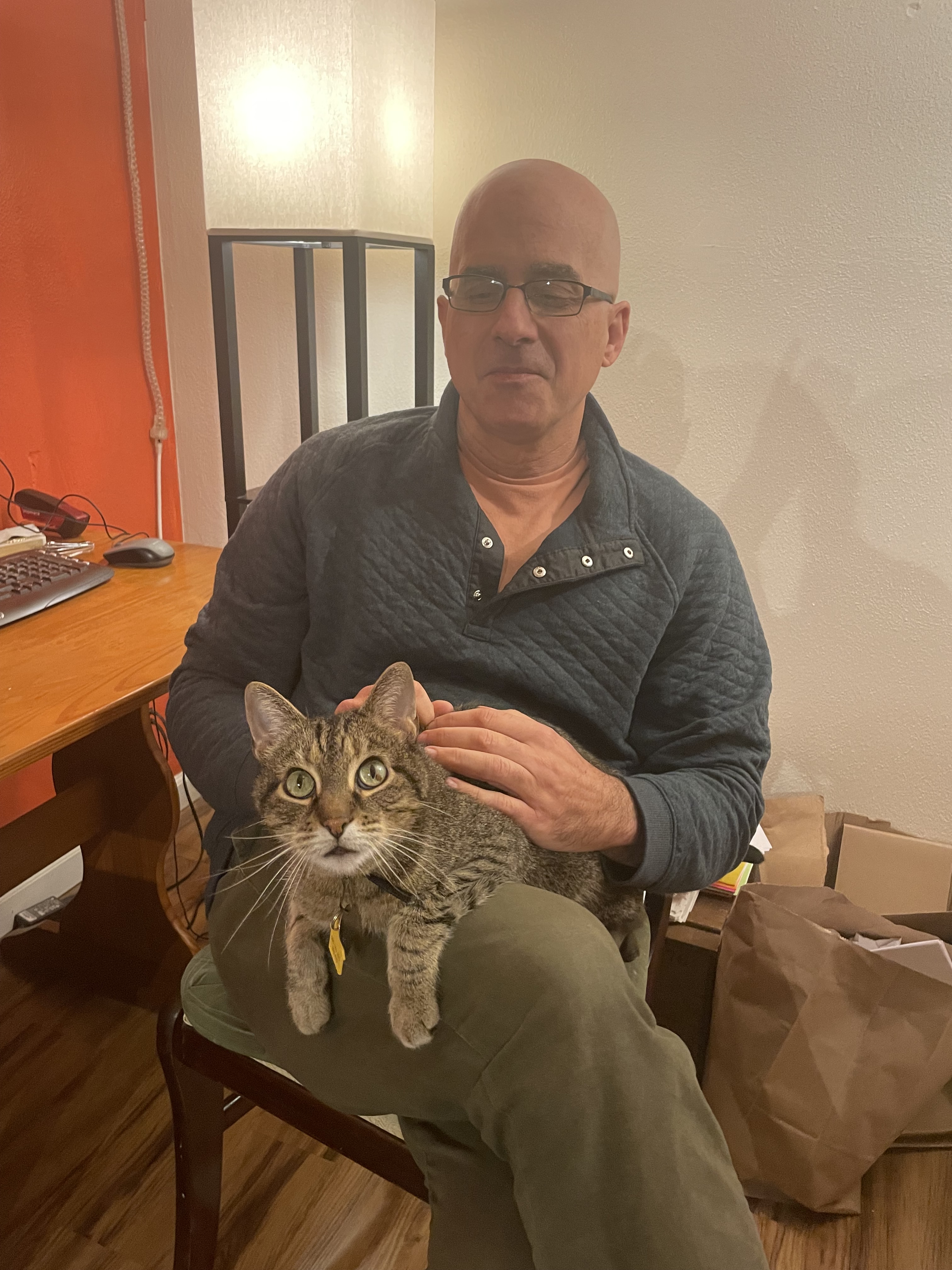
Richard Stimac has published a poetry book Bricolage (Spartan Press), two poetry chapbooks, and one flash fiction chapbook. In his work, Richard explores time and memory through the landscape and humanscape of the St. Louis region.
 the museum of americana: A LITERARY REVIEW