
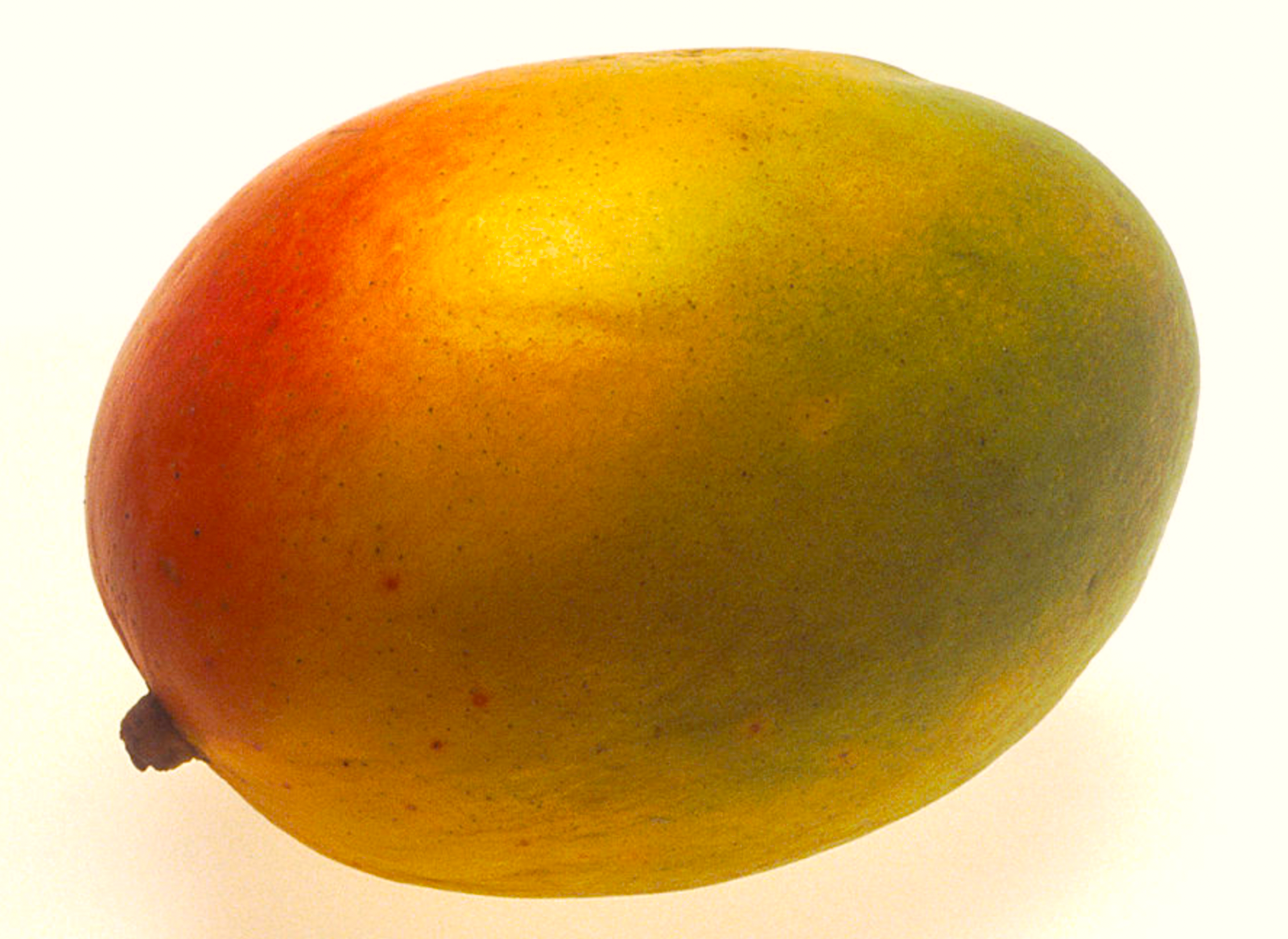
Somewhere on the way to Ensenada, we stopped for the view and ended up with a bag full of mangoes from a beach vendor. Maybe we got so many because Carlos was trying out his Spanish or because Cesar was showing off his. We three were in college, just beginning to learn about the world and ourselves.
We had no knife, no napkins—just our bare teeth and hands. We bit the skin and lifted a piece just long enough to insert a fingernail to peel away a strip. We watched the fibers separate and leave grooves in the orange flesh. We sucked it off the bone, and our eyes closed at its sweetness.
It was my first experience with the mango and I was in love. It was the early seventies. We were going back to our roots. I claimed my Mexican mother, my Filipino father, their unspoken histories. I claimed mangoes. Their promise of tender sweetness.
We ate mango after mango, greedy for its riches.
“It was my first experience with the mango and I was in love.”
Did you know, Carlos said, that Cortes christened the first coastal settlement Villa Rica before marching inland to destroy the great empire?
The mango pits, hard and bitter, piled up like dead bodies in the sand, the skins already wilting in the sun. Carlos bent to scoop the remains into a plastic bag. I belatedly knelt beside him to knot it. Cesar pushed a stray scrap into the sand with the toe of his sandal.
In his circumnavigation of the globe, Cesar said, Magellan landed in Cebu. He died in a skirmish with a tribe, but Spain had no shortage of conquerors and sent another. The Philippines offered up no gold, but brimmed with foods. The mango, for one.
The mango, we said, saluting one another with the dripping fruit in hand. As we watched the slow trickle down our arms, Cesar, the oldest of us, the most traveled, the most experienced in love, announced, “The mango is us.”
Our teeth were threaded with mango fibers. When we talked, the threads scratched our tongues. When we laughed, our teeth looked as if they were growing beards.
I imagine they wore beards, those men in galleons, all those months at sea bringing cargo from Manila to Acapulco. Spices, porcelain, silk—and mangoes—in exchange for silver.
We walked to the edge of the sea, linking arms as if we knew we would never again have such a day of mangoes. We waded in to wash the juice from our dripped-upon knees, shins, and toes. We cupped our hands with water to splash our chins. And then each other.
I wondered how far the scent of the mango would travel before vanishing? Or if it could be carried halfway around the world—where it began?
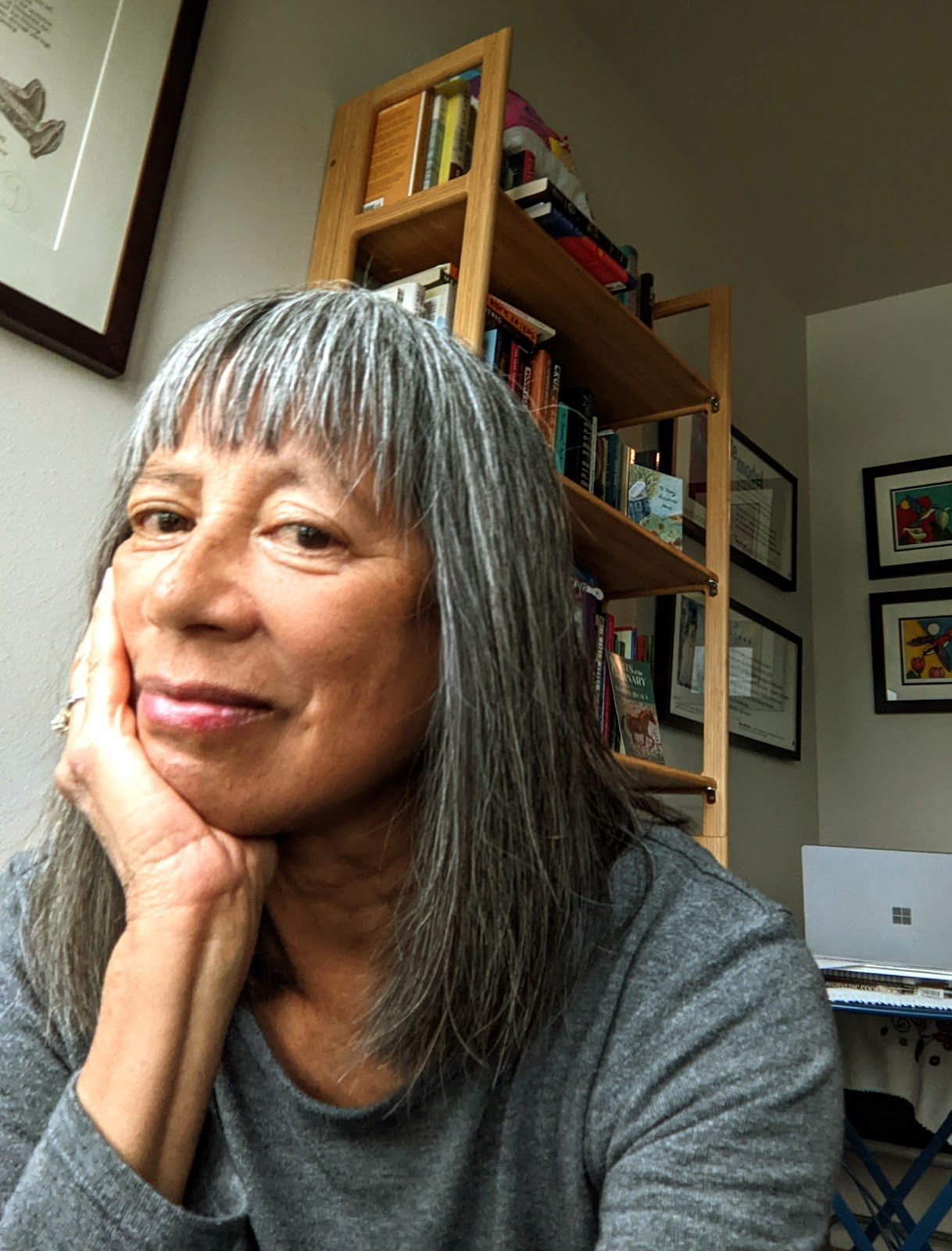
Donna Miscolta’s third book of fiction, Living Color: Angie Rubio Stories, was a finalist for the Washington State Book Award and won an International Latino Book Award Gold Medal. A recording of her work was recently added to the Library of Congress PALABRA Archive. She blogs monthly at donnamiscolta.com.
 the museum of americana: A LITERARY REVIEW