
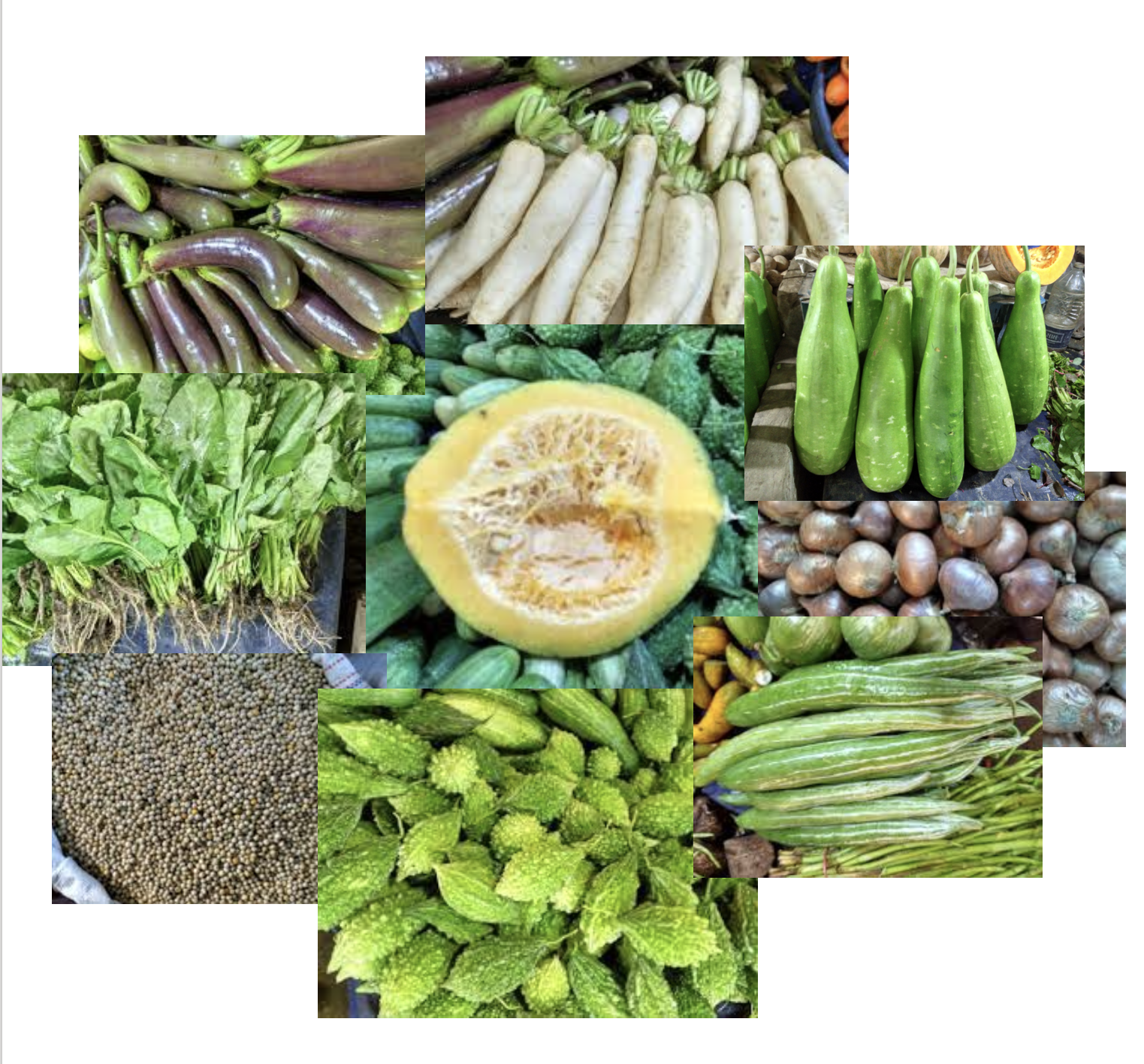
As a Bangladeshi American living in Massachusetts, an array of food traditions connect me with the other immigrants in the community. Coming from different cultural backgrounds, we find unity in the varieties of food we eat. The spices from India, Mexico, Jamaica, or China add distinct flavors to the vegetables our American friends would like boiled with a pinch of salt. Everyone knows about boiled eggs, poached eggs, omelets, and scrambled eggs, but whoever thought of cooking a spicy egg curry?
My Sri Lankan colleague, Ganga, often says, “You see, my dear, that is why we, the Americans, are like a nation of assorted chocolates—such a richness of taste when we blend.”
“…we each cook rice differently, and being rice fans, we share recipes”
Ganga and I share a table with other colleagues during lunch break in our workplace. All of us cook a lot and often share our recipes. Angela, our Italian colleague, often joins us, and she says pasta is a must-have for her on the weekends. For those of us coming from different corners of the world—Mexico, Thailand, India, and Bangladesh—rice is an everyday staple, comfort food we eat a few times a week. However we each cook rice differently, and being rice fans, we share recipes.
Mary, another work colleague, from Mexico, toasts her rice and cooks it with tomato, ginger, and onions. The Spanish style is to cook rice with vegetables, meat, and seafood (paella). Srilanka’s contribution is rice cooked with coconut milk, and the Bangladeshi style is a mixture of rice and lentils called khichuri.
For many Asians, Southeast Asians, Latin Americans, Jamaicans, and others, the cultural melting pot takes us to grocery shops that cater to the spicy touches in our kitchens. Moving to a new state or town would mean looking up available shops that provide our spices and other ingredients. In the Indian, Chinese, and Mexican groceries, the spice racks usually carry some form of chili powder, a blend of all spices, rice, lentils, and beans. Shopping for familiar food and cooking ingredients is a joyful occasion for women who cook for their families; there is therapy in feeding the family with one’s favorite dishes.
For the Bangladeshis living around New York, a trip to Jackson Heights in New York to buy fish is much-anticipated and delightful. A must-have are sweets like rosogolla, chom-chom from the sweetshop, “Premium,” and the tasty tea with milk. And you cannot possibly return home without hiccuping with delicious Shagor restaurant’s sea-fish dishes. And of course, when in New York, how can we come away without a misti- paan (the betel leaf touch)? And headed home with packed goodies, we fall into nostalgic songs like pan khaya much lal korilam…I have painted my lips with the color of the betel leaves. Families plan a trip to New York months ahead to buy Bangladeshi groceries as happily as if they were Christmas shopping.
When we look closer at the food connection, pregnancy brings seas of cravings for a mother-to-be. Over the phone, the mother-to-be tearfully laments for shutki-bhorta (dry fish dish, or hilsha curry). On the other end, the mother is quite helpless when it comes to sending fish since it is not allowed through the airports. Not everyone can make a trip to New York to enjoy Bangladeshi food in Jackson Heights. Bangladeshi myths state that when mothers-to-be have unfulfilled cravings, the babies go through long phases of drooling. The truth waits with the baby coming while the grandmother on the other end beats her forehead in desperation. On one of my flights back from Bangladesh, a desperate father requested that I bring cow’s milk for his son in the US. He mentioned that the milk was from his son’s cow, so it was necessary. Being a parent myself, knowing that feeling of missing our children, I could not refuse.
The stories have no boundaries. Speak of Africa, Australia, Russia, or Iceland: an empty stomach, a connection over food, and we unite with our hungry stomachs. Much as we would love to eat our familiar food, there is joy in sharing the different tastes from other cultures. When we relocate to far-off lands and leave ordinary people and lifestyles behind, our food habits adjust to the new life. Our stomach is said to be the body’s second brain; when it is happy, the mind works well. People come up with many creative ways to recreate foods of home. For instance, Bangladeshis make spicy-puffed rice (substitute for Jhal muri) with American rice cereals. Canned sardines are cooked with plenty of green chili and cilantro; one could almost taste the Bangladeshi chapila fish. At the same time, we could go miles to satisfy our stomach; every once in a while, we hear the affirmation that “mache-bhate Bangali,” fish and rice completes a Bengali. The Bangladeshis, when they have a community gathering, are most likely to cook six to seven dishes, and the parties go late into the night, complete with milk tea or cha as the special treat. Party or no party, when tea is offered to a guest, one could never think of serving just a cup of tea—it must be accompanied by a variety of snacks. The term is cha-ta; traditionally, the best of gatherings, called Adda, take place with tea and snacks. And, of course, Bangladeshis, as food-loving people, usually have three or four kinds of snacks to offer a cup of tea. For us, food is an offering of love.
“…an empty stomach, a connection over food, and we unite
with our hungry stomachs”
While spices and other ingredients may be on the store shelves for the immigrants, one can create new dishes that taste like those back home and yet touch something new from the adopted land. For people coming together from different parts of the globe, food is a common thread that unites us no matter where the people are. And when homesickness comes, often it’s in the form of the foods we miss from the land left behind. The cooked fish curry or the dry fish dish seems to linger between the stomach and the heart. The familiar spices, the wafting aroma from the kitchen, and the sharing with loved ones bring tears amid a new, comfortable life.
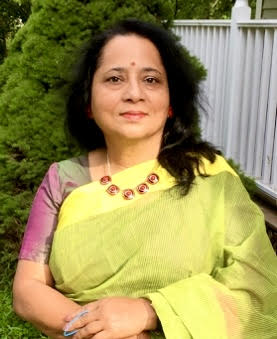
Tulip Chowdhury is a long-time educator and writer. She has authored multiple books, including Visible, Invisible, and Beyond, and Soul Inside Out, and a collection of poetry, Red, Blue, and Purple. The books are available on Amazon, Kindle, and Barnes and Noble. Tulip currently resides in Massachusetts, USA.
 the museum of americana: A LITERARY REVIEW