
Old Man Proffitt, by Scott Solomon
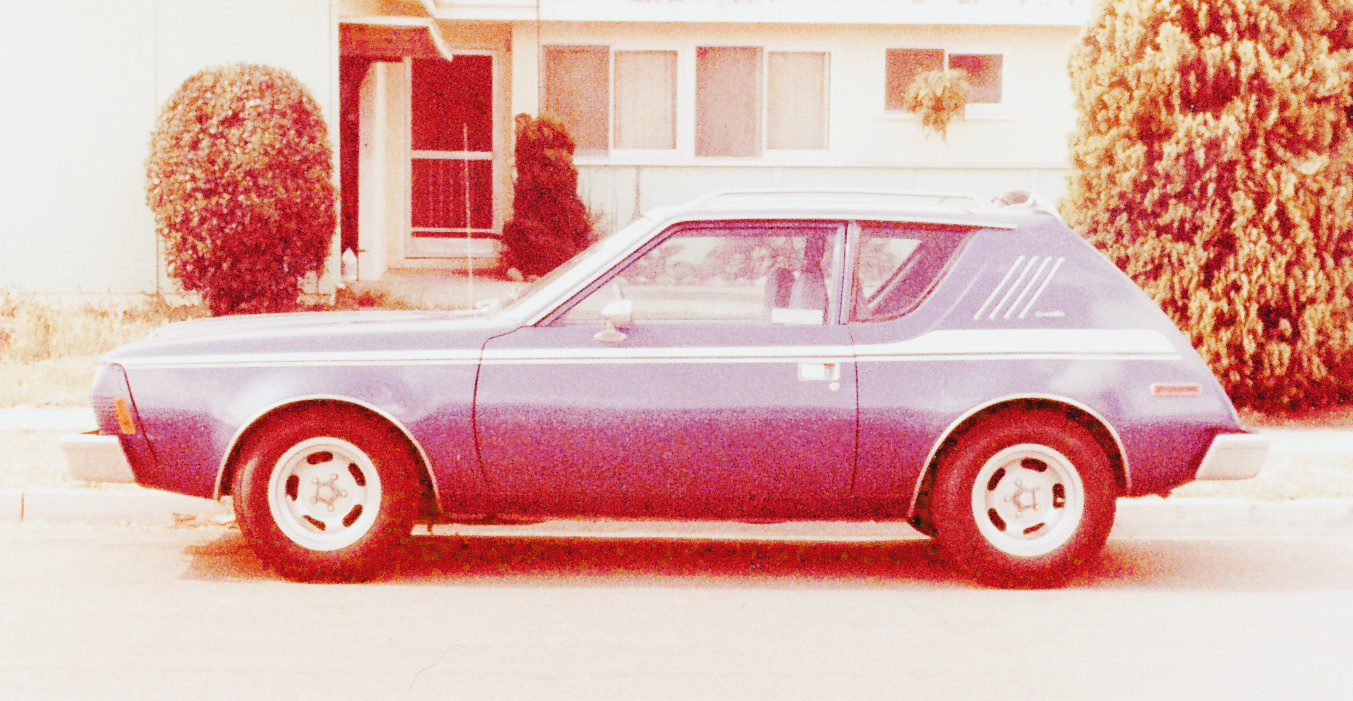
In 1979, after another aimless year away at college, I returned to my parents’ suburban home in the latest version of the New South. The Old South and its monuments to Confederate generals resided, as always, in the predominantly Black city limits. Meanwhile, Walgreens had invaded from up North, forcing locally owned Sudboro Pharmacy to compete for the business of the white citizenry in the surrounding county by instituting a new delivery service. As summer-job luck would have it, I became a new delivery boy, entrusted with the stubborn stick shift, absent air conditioning, and temperamental radiator of the drugstore’s decrepit red Gremlin.
I soon learned what kept Sudboro people going: antiarrhythmics and Fruity Pebbles for a widower hobbling around a rambler; anticoagulants and Reese’s Pieces for a widow scuttling across a ranch; antihistamines and Marlboros for a husband inhaling inside a colonial; antiasthmatics and Virginia Slims for a wife exhaling outside a cape; antipsychotics and Dr. Pepper for a punk pacing at a complex; antibiotics and Tab for a punkette frolicking in a flat.
I couldn’t complain. I earned minimum wage ($2.90 per hour) plus tips. Plus, at the end of each week, Mr. Sudboro slipped me a ten-dollar bill with the understanding I would keep his big tip a secret, which, to this day, I have.
All this, plus, in deference to the sticky working conditions, no dress code. Just tangled brown hair, a Pink Floyd T-shirt, holey blue jeans, and a sunburned elbow as “My Sharona” strutted from the radio out the window.
Such freedom fell short of minimizing one big minus: a drop in oil output due to the Iranian Revolution had ratcheted the price of refined liquid gold from $0.62 to $0.86 per gallon with nothing to stop it from rising higher. Though the pharmacy reimbursed for gas, it was hard, as with everything, to keep up.
“Hurry,” Mr. Sudboro would say, when not wiping thick glasses and loading thin vials. “These prescriptions and sundries can’t wait. It’s a matter of life and death.”
I got the message ad nauseam. And though I took the shortest distance between delivery points, the slow-footed Gremlin swilled fuel.
Rather than crawl through 7-Eleven, Circle K, or UtoteM, I sought sustenance at Old Man Proffitt’s.
I had no deliveries at the intersection of Shrine and Spring. For that matter, I had never seen the shrine or the spring for which those kudzu-cloaked roads were named. Then again, seeing as it was way out of the way and charged $0.99 per gallon, Old Man Proffitt’s manifested neither customer nor line. This confluence of conveniences facilitated fast filling from a faded green dinosaur gracing an aptly prehistoric pump, the extra expense destined for extinction courtesy of digging into the ten-spot and other tips in my pockets. So be it. As long as the expected money from customers materialized, Mr. Sudboro didn’t need receipts.
Old Man Proffitt didn’t have much need for words. His suspendered silence stayed seated on a rolling stool behind an antique register buckling a warped counter near a wobbly fan on a stuck window sill under the hunched rafters of his curious country store. How the blackest person I had ever seen landed so far from the city was beyond me. Out of ignorance, I surmised he escaped history, with no living relatives, leaving him to live, as well as work, on premises.
In the beginning, it took work to locate the Royal Crown Colas, moon pies, chess tarts, beef jerky, rolling paper, and rolling tobacco I required, much of which would be difficult to find anywhere, all of which was miraculous to find in one place. After more than one sally, I summoned the courage to forgo the tobacco, whose only role had been to shield the rolling paper’s true fate. Of course, I always thanked Old Man Proffitt. He always nodded in return.
With what little was left of my wages, I got high, as I recall, only off-duty, when I dreamt of losing my virginity using a Proffitt prophylactic with a girl who, other than fulfilling the age of consent, actually liked me, maybe even loved me, and I her—before the munchies, RC Cola, pies, and beef jerky brought me back to earth.
One day, stomach rushing on empty in a Gremlin incapable of exceeding the speed limit, I approached the intersection of Shrine and Spring, before…’round and ’round…where am I?…’round and ’round…slam the breaks…’round and ’round…miss that ditch…’round and ’round…until, as front wheels flailed, what remained of the rear anchored what wasn’t fishtailing anymore. I didn’t think to thank God for the ability to unfasten the seat belt, tumble out the door, elude a gash of rust bloodying a pool of leaking gas, fail to look both ways, cross the street, spy a white Impala fuming near a pair of black trails, spot a couple expelling white snot beneath mulleted coifs, lurch into Old Man Proffitt’s, and pant.
Soon thereafter in the unforgiving heat, a chalky cop in a black uniform exited a black car and asked, “What in God’s name?”
“He was speeding,” said one of the mullets, a blond dude in a white shirt with white bell bottoms. The second mullet, the dude’s joined-at-the-hip blond old lady, was likewise pushing thirty, at two in the afternoon, with nary a silver disco ball in sight.
“Is anyone hurt?” said the cop.
“No,” the two answered.
“No, sir,” I said.
“Okay,” said the cop. “What happened?”
“He was speeding,” repeated the guy.
“I saw the whole thing,” came words from the counter.
“Who said that?” said the cop.
“That boy,” said Old Man Proffitt, nodding my way, “wasn’t speeding.”
“Was too!” said the gal.
“This boy,” said Old Man Proffitt, pointing to the male Impala, “ran the stop sign. Had this boy and his big car sped through a second sooner, he would have hit the little car in front instead of in back and that boy there would be dead.”
As scarlet corpuscles illuminated Old Man Proffitt’s face, I nodded with gratitude toward the affiliated voice, which, maybe from low mileage, sounded springy.
“Not to mention,” went on the witness, “that boy did a fine job bringing his little car under control before anyone or anything in the vicinity could come to a bad end.”
“Are you going to let this boy,” said the female Impala, pointing at Old Man Proffitt, “get away with a pack of lies?”
My face darkened. Old Man Proffitt’s wrinkles blazed. Something or someone had to give.
The cop took off his cap, swept the sweat from his blond brow, and took in the ceiling. From there, he looked at me. He looked at the Impalas. He looked at Old Man Proffitt.
“Skid marks don’t lie,” mumbled the cop.
“Since when?” said the Impalas.
“Old Man Proffitt,” said the cop’s cleared throat, “you need not appear in court.”
The unneeded didn’t exactly nod.
“Shouldn’t you be contacting the pharmacy?” said the cop to me.
“I’ll take care of it,” said Old Man Proffitt as he rolled on his wheeled stool to a flesh-toned phone.
“Don’t worry about the drugs, diapers, and douchebags that spilled; they can wait,” said Mr. Sudboro, even faster than usual, after Old Man Proffitt turned over the phone. “Don’t worry about the Gremlin; I’ll replace it with a new used Pinto, air-conditioned. Don’t worry about going off the beaten path to refuel; you’ve made it up in volume. Don’t worry about the added cost; Old Man Proffitt is gathering the gasoline receipts, so I can make you whole.”
I handed back the phone. “Thank you, Mr. Proffitt.”
He nodded.
In lieu of directing nonexistent traffic, the cop shepherded the wreckers, measured the marks, stuffed the Impalas in a cab, and gave me a ride home.
“When you go to court,” said Mom as I stared into a supper of rare roast beef, “don’t let the woman from the other car get in one word edgewise. The way she talked to the Black shopkeeper was a crime. She’ll say she’s got whiplash, so she can cash in. Say, why aren’t you eating?”
“Would you like one of my Valiums, son?” said Dad, as his eager fingers ran a dinner roll back and forth over the crimson liquid on his plate. “A mishap can predispose to upset.”
“Upset? I’ll tell you who’s upset,” said Mom, blotting pink lemonade from her pursed lips. “Me at your poor appetite and the prospect of that woman making off with insurance money.”
“God looked out for you, son,” said Dad. “He doesn’t want you to end up like that poor old man.”
God! After I excused myself, I walked—no—ran out of the house, out of the subdivision, onrushing headlights be damned, sweating, crying, trying to reach a place, now closed.
~~~

Scott Solomon’s fiction has appeared in Chicago Quarterly Review, North American Review, New Letters, and other literary magazines. When not writing, Scott helps seekers prepare for the GED. He also reaches a runner’s high on the trails of Raleigh’s Umstead Park.
 the museum of americana: A LITERARY REVIEW